Introduction
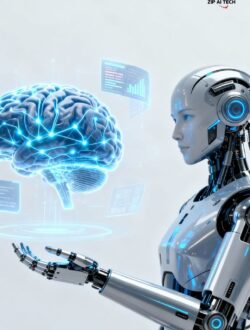
Artificial Intelligence (AI) and Machine Learning (ML) are among the most significant technological advancements of the 21st century. These technologies are transforming the way people live, work, learn, and interact with the world. The benefits of AI and ML refer to the development of computer systems capable of performing tasks that typically require human intelligence, such as decision-making, problem-solving, language translation, and visual perception. Machine Learning is a major branch of AI that enables systems to learn from data, improve their performance over time, and make predictions without being explicitly programmed for every task.
Today, AI and ML are commonly used in smartphones, search engines, online shopping platforms, healthcare systems, transportation services, banking applications, and educational tools. Their ability to process enormous amounts of information quickly and accurately offers immense benefits to individuals, businesses, and society. This essay discusses the major advantages of AI and ML across various important fields.
Improved Efficiency and Automation
One of the most significant benefits of AI and ML is increased efficiency through automation. Repetitive and time-consuming tasks that once required human effort can now be completed in seconds by intelligent systems. For example, AI-powered software can automatically sort emails, manage schedules, analyze documents, and generate reports. In factories, robots use AI to assemble products faster and more precisely than humans, resulting in higher productivity and fewer errors.
Automation also reduces operational costs for companies. By replacing manual labor with machines for routine tasks, businesses can reassign workers to roles that require creativity, communication, and problem-solving skills. This balanced collaboration between humans and machines enhances productivity while maintaining quality.
Enhanced Decision-Making
AI systems excel at analyzing large datasets and identifying patterns that humans might overlook. Machine Learning algorithms process vast volumes of data within seconds, enabling organizations to make informed decisions based on accurate predictions.
In finance, AI helps evaluate loan eligibility, detect fraudulent transactions, and predict market trends. Retail businesses use AI to analyze customer behavior, forecast demand, and optimize inventory management. Governments apply AI for population analysis, traffic management, and disaster response planning. The speed and accuracy of AI-driven decision-making minimize risks and increase efficiency across multiple sectors.
Applications in Healthcare
Healthcare is one of the sectors that has benefited the most from AI and ML. AI-powered diagnostic tools assist doctors in detecting diseases such as cancer, heart conditions, and neurological disorders with greater accuracy. For instance, ML models trained on thousands of medical images can identify early signs of tumors that might go unnoticed by human eyes.
AI also improves patient care through personalized treatment plans. By analyzing a patient’s medical history and genetic data, ML systems recommend medication and therapy suited to individual needs. Robotic surgery powered by AI ensures higher precision, smaller incisions, and faster recovery times.
Additionally, virtual health assistants provide 24/7 medical guidance, reminder alerts for medications, and symptom analysis. These innovations enhance accessibility to healthcare, especially in remote areas where medical professionals may be unavailable.
Advancements in Education
Education has been revolutionized by the integration of AI-based tools. Intelligent tutoring systems customize learning materials according to students’ strengths, weaknesses, and learning speeds. Students receive personalized quizzes and lesson plans that ensure better understanding and improved academic performance.
AI tools also support teachers by automating tasks like grading assignments, creating progress reports, and organizing classroom activities. This allows educators to focus more on teaching, mentoring, and supporting students individually.
Language learning platforms use ML algorithms to correct pronunciation, expand vocabulary, and develop conversational skills. Furthermore, AI-powered translation tools make educational content accessible to students globally, overcoming language barriers and promoting inclusive learning.
Innovation in Business and Commerce
Businesses depend heavily on AI and ML technologies to gain a competitive edge. E-commerce companies use recommendation systems to suggest products based on browsing history and purchase patterns. This personalization improves customer satisfaction and increases sales.
AI chatbots provide instant customer support by answering queries, processing refunds, and resolving issues without human involvement. These bots operate continuously, ensuring timely assistance while reducing support costs.
In marketing, ML analyzes consumer preferences to design targeted advertising campaigns that reach the right audience. AI also streamlines supply chain management by predicting material demands, optimizing delivery routes, and reducing wastage.
Transportation and Smart Cities
The transportation sector witnesses remarkable benefits of AI and ML. Self-driving vehicles rely on ML algorithms to interpret road conditions, recognize traffic signals, detect obstacles, and ensure passenger safety. Although fully autonomous vehicles are still under development, assisted driving technologies such as lane detection and collision prevention already save countless lives annually.
AI also plays a role in creating smart cities. Traffic lights adjust dynamically to real-time traffic flow, reducing congestion and travel time. Public transport schedules are optimized using predictive models to minimize delays and overcrowding. Energy consumption systems powered by AI ensure smart distribution of electricity and reduce power wastage.
Environmental Protection
AI and ML support sustainable development by promoting environmental conservation. Data analysis tools monitor climate changes, deforestation patterns, wildlife populations, and air quality levels. Early warning systems using AI predict natural disasters such as floods, cyclones, and wildfires, allowing authorities to implement preventive measures and evacuate citizens on time.
Smart agriculture systems utilize ML to analyze soil conditions, weather data, and crop patterns, helping farmers increase yields and reduce fertilizer waste. Precision irrigation powered by AI minimizes water use while maintaining crop health, thus promoting environmentally friendly farming practices.
Safety, Security, and Crime Prevention
Security systems benefit immensely from AI-powered facial recognition, biometric identification, and real-time surveillance analytics. ML algorithms detect suspicious behavior in crowded places and alert authorities to potential threats. AI systems also assist law enforcement in handwriting analysis, video examination, and crime pattern detection.
In cybersecurity, AI identifies unusual online activities indicating hacking attempts or malware attacks. Automated defense systems isolate threats instantly, preventing large-scale data breaches and maintaining network security.
Support for Creativity and Research
Contrary to fears that AI may limit human creativity, it actually enhances innovation. Artists use AI tools to generate music, paintings, videos, and interactive digital experiences. Writers utilize ML-based grammar checkers and idea generators to improve productivity and writing quality.
In scientific research, AI accelerates discoveries by processing massive datasets rapidly. It is instrumental in drug development, space exploration, and climate modeling. AI reduces research timelines from years to months by simulating experiments that would otherwise be extremely costly.
Job Creation and Skill Development
While AI automates certain jobs, it also creates new employment opportunities. Emerging career fields include data science, AI engineering, cybersecurity analysis, robotics management, and digital ethics consultation.
AI fosters skill development by offering online training platforms and interactive learning modules that help individuals adapt to new technologies. By enhancing digital literacy, AI contributes positively to workforce growth and future employment prospects.
Conclusion
Artificial Intelligence and Machine Learning continue to reshape modern society in powerful and meaningful ways. From healthcare and education to transportation, business, and environmental protection, these technologies improve efficiency, enhance decision-making, promote safety, and expand access to essential services. While ethical and social concerns remain important discussions, responsible development and regulation can ensure AI benefits all sections of society.
As technology evolves, the Benefits of AI and ML will become even more integrated into daily life. Their potential to solve global challenges, stimulate innovation, and enhance human potential makes them indispensable tools for progress. When developed wisely and used ethically, Artificial Intelligence and Machine Learning represent a promising path toward a smarter, safer, and more sustainable future.